



The core dispute in this decision concerns Input Tax on Management Services provided to a company that is not formally a service company. According to the Directorate General of Taxes (DGT), this PM cannot be credited in accordance with Article 9 paragraph (8) letter b of the VAT Law.
The DGT rejected the Input Tax credit on the grounds that the Management Services transaction was not real, supported by the fact that the party receiving the management services, PT AKR, was not engaged in management services. In the DGT's view, this indicated the existence of a Tax Invoice Not Based on an Actual Transaction (FP TBTS), thus deeming the services not directly related to business activities.
In contrast, PT TNU denied this, relying on formal evidence of a Management Fee Agreement and the placement of key personnel (Directors and Commissioners) who actually performed management functions within the company. The Taxpayer argued that as long as the service substance is real and VAT has been collected, the right to credit should be granted.
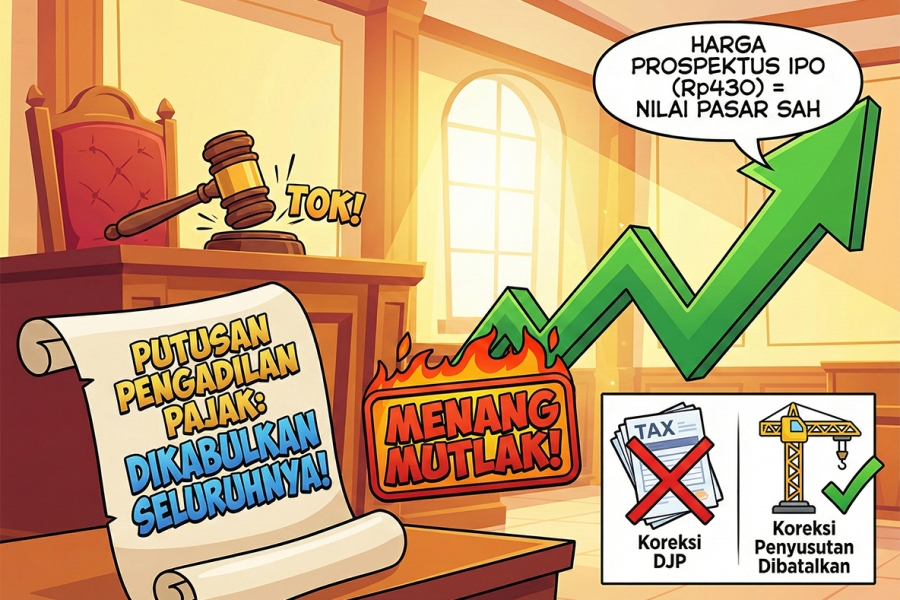
The Panel of Judges, in its legal considerations, held that determining whether a delivery is subject to VAT must focus on the substance of the service rendered, namely the presence of Directors and Commissioners performing management functions. The involvement of these personnel is implicitly recognized as a Taxable Service directly related to business activities. Therefore, the service provider's business status is irrelevant if the existence of the service is proven and generates economic benefits. This decision substantially overturns the DGT's Input VAT correction and grants all appeals from PT TNU.
This decision has significant impacts and implications for tax practices, particularly for companies involved in groups that provide management services. First, this decision reinforces the need for taxpayers to have strong documentation, not only in the form of agreements but also evidence of service performance (benefit tests and time sheets) to prove the existence of the service, as long as the substance of the service and formal compliance with the tax invoice are met.
In summary, PT TNU's success in this dispute lies in its ability to convince the Panel of Judges that the Management Fee paid was for a real service, generated economic benefits, and was essential to the continuity of the business. Therefore, ensuring that every affiliated service transaction is supported by comprehensive evidence of performance, not just formal documentation, is key to winning Input Tax credit disputes in the Tax Court.
A Comprehensive Analysis and Tax Court Decision on this Dispute are Available Here













 tpc.consulting
  tpc.consulting
  info@taxindo.co.id